

Why did Korea become a "Beauty Powerhouse"? — The Reasons and Historical Background
― A millennium-long lineage of Confucian culture and "aesthetic capital"
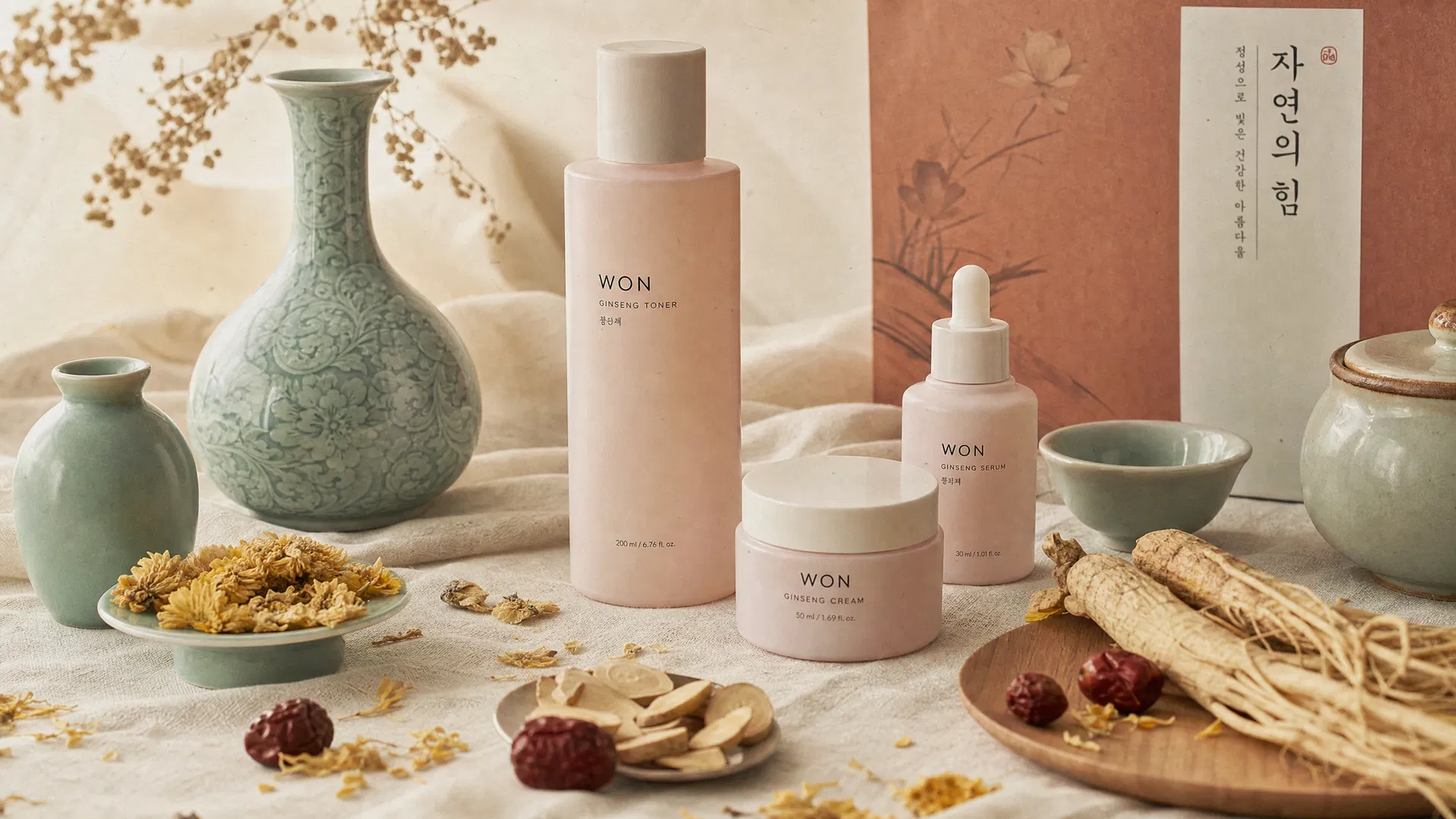
K-beauty continues to increase its presence in drugstores and e-commerce sites around the world. Concepts such as sheet masks, cushion foundations, and "glass skin" have now become a common language that transcends national borders. Yet, if we stop to think about it, it’s a mystery. Why is Korea so powerful in the beauty industry?
The answer cannot be explained solely by "corporate efforts" or "marketing prowess." Underlying it is a unique cultural soil that has been passed down for over a thousand years. Confucian ethics, Joseon Dynasty medicine, the conscription system, the IMF crisis, the arrival of the SNS era — many historical layers have overlapped to create the phenomenon that is K-beauty today.
In this column, we will take our time to unravel this multifaceted background in 11 chapters.
A Millennium of K-beauty — A Timeline at a Glance
-
1392
Founding of the Joseon Dynasty Neo-Confucianism becomes the state religion. Confucian ethics permeate society over 500 years.
-
1613
Completion of the "Dongui Bogam" The culmination of traditional Korean medicine (Hanbang). Later registered as a UNESCO Memory of the World.
-
1916
Launch of Parkga Bun Korea's first domestic cosmetic product. Modern cosmetic culture buds during the Japanese colonial period.
-
1966
Pacific Chemical (now Amorepacific) listed on the stock market The postwar reconstruction period of Korean cosmetics begins.
-
1997
Asian Financial Crisis (IMF Crisis) A major shift in national strategy. Culture, content, and beauty become new pillars of exports.
-
2003
Hit of "Winter Sonata" and "Dae Jang Geum" The first Hallyu boom. Cosmetic exports expand rapidly.
-
2008
Invention of Cushion Foundation Developed by Amorepacific ahead of the rest of the world. Rewrites the common sense of global cosmetics.
-
2012
BB Cream dominates the global market The trend of Western cosmetic majors outsourcing production to Korean OEMs accelerates.
-
2016
10-step skincare goes viral in the West Sephora and others launch large-scale K-beauty sections.
-
2020
Rapid growth of e-commerce during the pandemic The Asian and Western markets accelerate again through global e-commerce sites like Olive Young and Stylevana.
-
2024
Cosmetic exports reach an all-time high Korea surpasses France to become the #1 source of imports in the US market. Becomes the world's second-largest cosmetic exporter.
CHAPTER 01 "Our body, hair, and skin are gifts from our parents"
― Caring for the body is an act of filial piety
To understand Korea, one must first recognize the presence of Confucianism. Neo-Confucianism, adopted as the state religion for 500 years by the Joseon Dynasty (1392–1910), permeated every corner of people's lives and remains deeply rooted in modern Korean society.
The Confucian classic, the Classic of Filial Piety (Xiaojing), contains this passage:
"Our body, hair, and skin are gifts from our parents; to not injure them is the beginning of filial piety."
― Classic of Filial Piety, Opening Chapter
In other words, the teaching is that "because your body is given by your parents, keeping it free from injury and cherishing it is the first step in showing filial piety." In Korean society, this developed into the interpretation that "keeping the body clean and grooming oneself is a moral obligation."
This is crucial: In Korea, beauty has been positioned not merely as a desire to "look good," but as part of a "stance of trying to be a righteous person." Taking care of one's skin and grooming oneself is an act of self-discipline and an expression of respect toward others. This ethical foundation supports the Korean appetite for investment in beauty at a level different from other nations.
In modern Korea, it is not surprising to learn that college students spend 30 minutes on their skincare every morning or that men wear BB cream to work when you understand this cultural context. It is not "fashion," but "etiquette."
CHAPTER 02 The wisdom of "Hanbang Beauty"
cultivated by the Joseon Dynasty
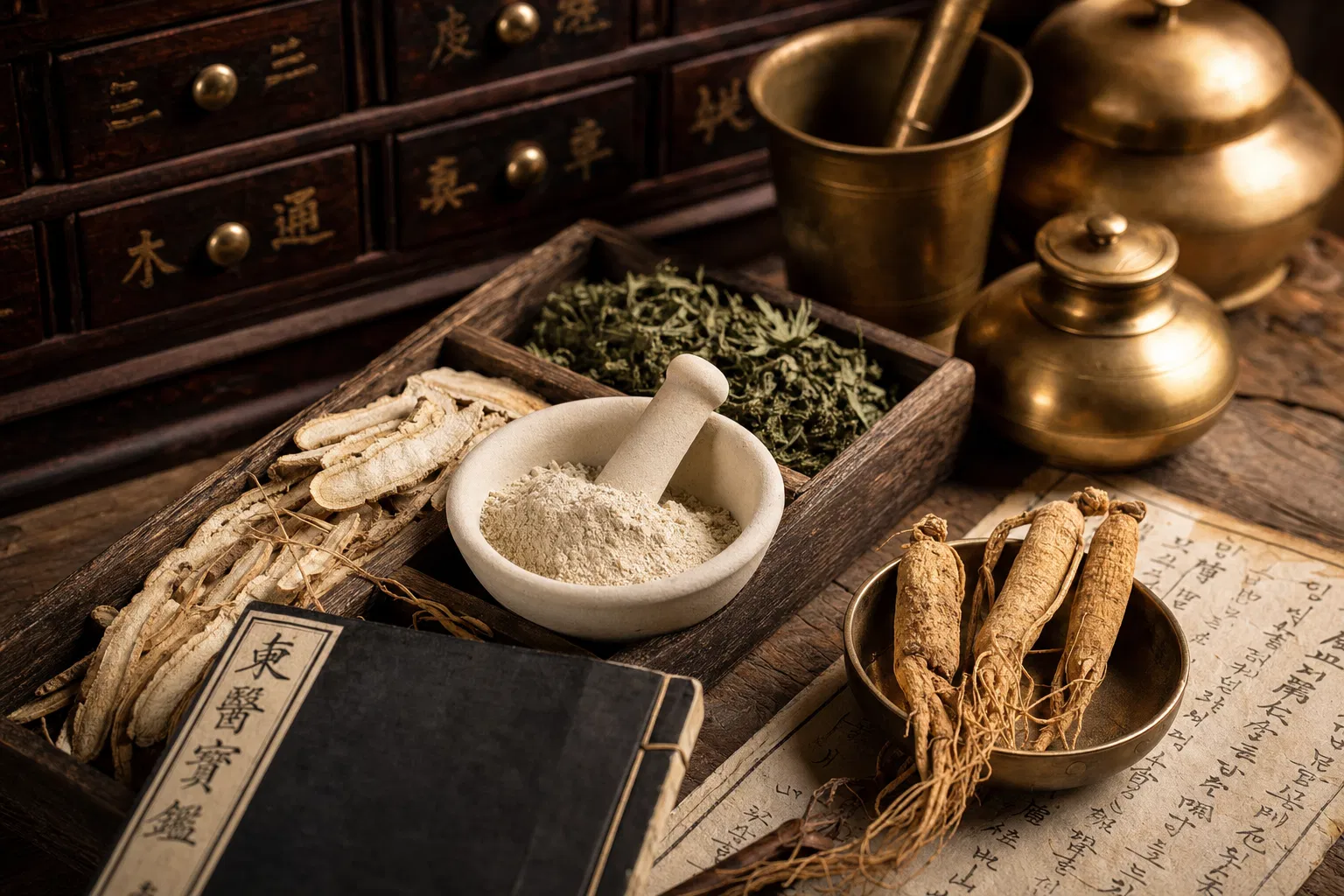
If Confucianism provided the spiritual foundation, the Hanbang (Korean traditional) medicine that blossomed during the Joseon Dynasty is the "technical root" of K-beauty.
The Dongui Bogam, completed in 1613, is a medical text considered the culmination of Korean medicine and was registered as a UNESCO Memory of the World in 2009. Its author, Heo Jun, reorganized Chinese medicine to fit the Korean climate and systematized prescriptions using medicinal herbs and ingredients available on the Korean Peninsula.
This book also contains numerous descriptions regarding skin care. Methods for washing the face with mung bean powder, toning the skin with rice water, and honey and egg white packs — many of the formulations sold today as "Hanbang cosmetics" actually have their roots in this era.
"The skin is a mirror of the internal organs. If you condition the inside, the outside will naturally shine."
― Fundamental philosophy of Hanbang medicine
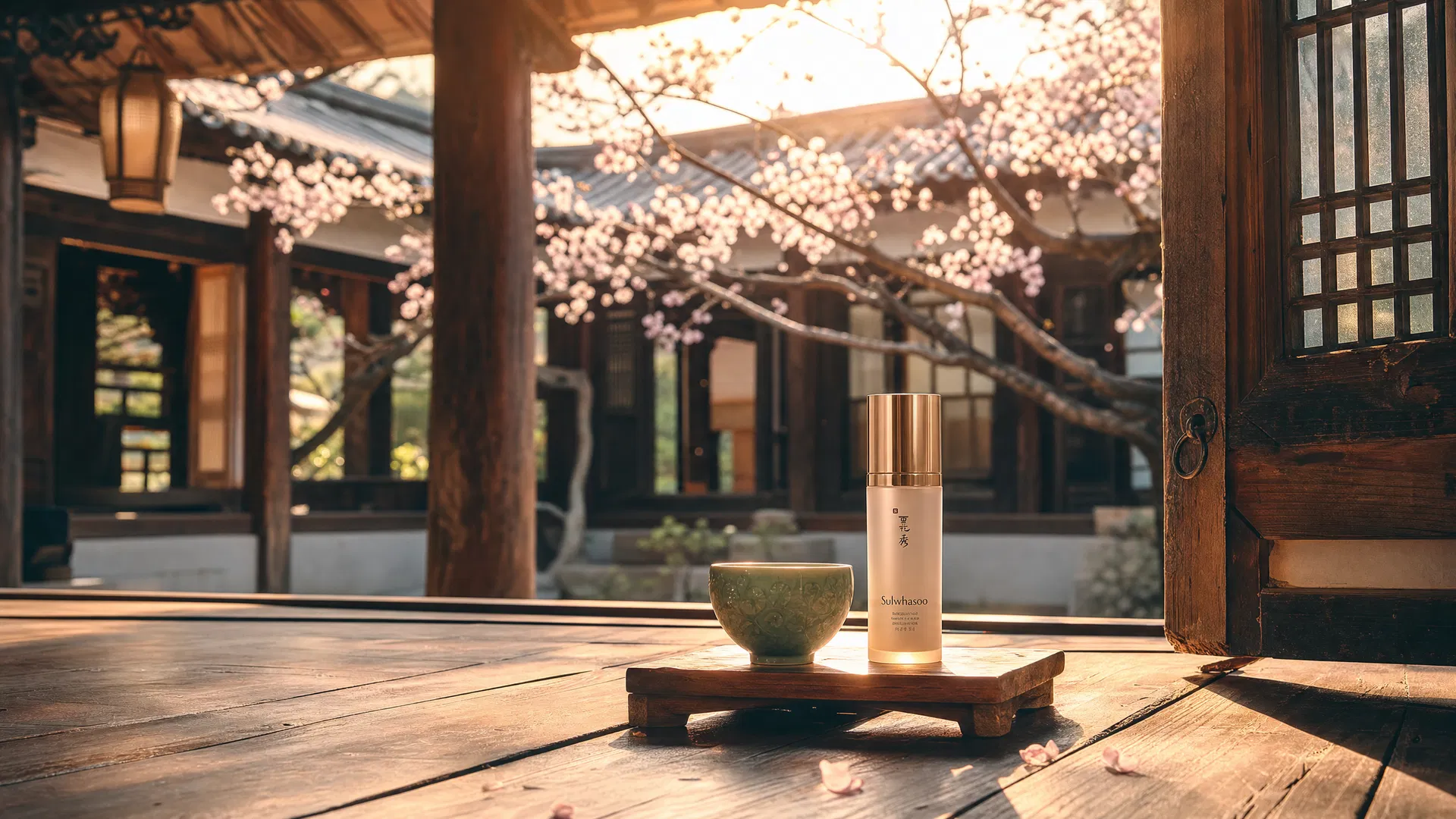
This concept of "internal and external unity" has been passed down into modern K-beauty. It is a direct lineage that high-end Korean skincare brands like Sulwhasoo and The History of Whoo place Hanbang ingredients—such as ginseng, deer antler, and cordyceps—at the center of their formulations.
And the philosophy of "conditioning from the inside" does not stop at skincare. The same "internal and external unity" philosophy breathes in the relationship between Korean food culture and beauty, as well as in beauty habits centered around fermented foods.
What is interesting is that the wisdom of Hanbang has descended from "prestige" to the "masses." Even brands at price points available in drugstores have shelves filled with products using traditional ingredients such as mugwort (ssuk), Centella asiatica (byeongpul), and rice bran (ssalgyeo). Formulations from a thousand years ago are scientifically validated in modern labs and delivered to the world at affordable prices — this trinity of "Tradition × Science × Accessibility" is the core strength of K-beauty.
CHAPTER 03 The lineage of pale skin
― From Yangban culture to Glass Skin
When talking about Korean beauty ideals, the longing for "pale skin" is unavoidable. This is not simply a matter of "liking the color white," but a concept that has developed over a thousand years and carries social and class connotations.
During the Joseon Dynasty, at the top of society was a ruling class called Yangban. They studied Confucianism and supported the state as bureaucrats, and did not engage in manual labor. On the other hand, farmers and merchants worked under the blazing sun, and their skin became tanned. The composition of "pale skin = proof of a class that does not need to work outdoors" can be seen not only in Korea but in various parts of Asia; however, it was particularly deeply etched in Joseon, where Confucian class consciousness was strong.
Although the class system was abolished in modern times, the aesthetic sense of pale skin has survived as is. It can even be said that it became an era where anyone could aim for a "clean and elegant" look like that of the Yangban. The fact that the term 맑은 피부 (malgeun pibu / clear skin) frequently appears in modern beauty conversations is a remnant of that.
And today. This ideal of "skin that is pale, clear, and glows from within" has been exported to the world, taking on various names:
● Glass Skin — Skin that is transparent, smooth, and glows like glass
● Honey Skin — Moist, dewy glow as if coated in honey
● Cloudless Skin — Skin as clear as a cloudless sky
● Glow Skin — Radiance that seems to emit from within
While these are all translated expressions, the prototype is the ideal of "clear skin" since the Joseon Dynasty. The biggest reason why K-beauty is supported all over the world is that it had an answer honed over a thousand years for this universal longing for "clear beauty that glows from within."

CHAPTER 04 Nunchi culture and "Aesthetic Capital"
Another characteristic of Confucian society is viewing human relationships in terms of strict hierarchies. Age, status, family lineage. In a society where you must change your behavior depending on who you are interacting with, the sensitivity toward "how I am seen by others" naturally increases.
There is a unique Korean word for this sensibility: "Nunchi (눈치)." It literally translates to "eye power," but it means "the ability to instantly perceive the atmosphere of a place, the emotions of others, and one's own standing." In Korean society, it is said that someone without nunchi is disqualified as an adult.
Under this nunchi culture, one's appearance is not just an outfit, but a business card that communicates "where you stand in society." The French sociologist Pierre Bourdieu called education and manners "cultural capital," and in Korea, appearance has functioned as "aesthetic capital."
Clear skin is proof of effort and cultivation. Proper makeup is etiquette. Well-groomed hair is an expression of self-management ability. Under such recognition, beauty is neither a hobby nor a luxury, but basic equipment for a functioning member of society. The fact that the culture of attaching ID photos to job application resumes remains strong is evidence that aesthetic capital functions as part of personnel evaluation.
In recent years, while debates in the context of "lookism" criticism have increased, the sense that investment in appearance is within the "scope of self-responsibility" remains strong in Korean society, which continues to support a high base level of cosmetic consumption. Furthermore, this consciousness toward "aesthetic capital" is equally directed not only at skin but at hair as well. The reason why K-beauty lovers prioritize hair care is exactly for this reason.
The 5 Pillars Supporting K-beauty
CHAPTER 05 How the IMF crisis ignited
the pivot toward a "Beauty State"
The Asian Financial Crisis (IMF crisis) that hit Korea in 1997 was a major economic blow that shook the foundation of the nation. Unemployment rates soared, many conglomerates were dissolved, and citizens contributed their gold to help save the country.
However, this crisis brought one important turning point to Korea: a major shift in national strategy, declaring that "We cannot win globally with just heavy industry and manufacturing. We will become a nation that earns through culture and content."
The government enacted the Framework Act on the Promotion of Cultural Industries and began fostering movies, music, games, and cosmetics as "strategic export industries." The Korea Creative Content Agency (KOCCA) was established, and a system was set in place for K-POP, Korean dramas, and K-beauty to be sent out to the world in unity.
For the cosmetic industry, tax incentives for R&D, export support, and deregulation were implemented one after another. Korean cosmetic regulations established a "functional cosmetic" category, pioneering an intermediate area between pharmaceuticals and cosmetics. This allowed products containing high concentrations of active ingredients such as retinol, niacinamide, and arbutin to reach consumers without a prescription.
25 years after the IMF crisis, Korean cosmetic exports reached an all-time high in 2024, surpassing France to become the #1 source of imports in the US market. A national strategy born from the depths of despair pushed Korea to where it is now: the world's second-largest cosmetic exporter.
If you want to incorporate the "design philosophy" of K-beauty into your daily hair care, please also take a look at the KEMA Crema Series.

CHAPTER 06 Hallyu and the idol economy
― The beauty mass-production system
Parallel to the national strategy after the IMF crisis, another weapon Korea sent to the world was Hallyu (the Korean Wave).
Starting with the massive hit of Winter Sonata and Dae Jang Geum in the Asian region in 2003, Korean dramas and music spread all over the world. And this Hallyu content has always functioned as a "showcase" for K-beauty.
K-POP idols' skin is managed to look literally "perfect." Skincare routines are drilled into them from their trainee days, and after their debut, they continue to use products as brand ambassadors. Fans imitate the idols' "skincare routines" and buy the same products.
This structure is different from mere celebrity advertising. The idols themselves function as "practitioners of beauty," and their daily lives become content that generates consumption. The sight of BTS members talking to fans while wearing sheet masks on VLIVE planted a new common sense in young people all over the world that "men also do skincare."
Furthermore, Korean entertainment agencies are actively involved in joint development with cosmetic brands. Collaboration products bearing the idols' names, limited-edition packaging, sets with signed photo cards — these are systems that fuse "fandom activities" and "beauty," directly linking the purchasing power of the fandom to the K-beauty market.
The greatest contribution Hallyu has brought to K-beauty is probably making "Korean beauty standards" one of the global defaults. Glass skin, gradient lips, natural eyebrows — the power of Hallyu content created an era where these are recognized not as "Korean-looking," but as "simply beautiful."
CHAPTER 07 The world's largest male beauty market
born from the conscription system
It is not widely known that Korea holds an overwhelming share of the global male beauty market. Per-capita spending on male skincare is the highest in the world. Korea is one of the only countries in the world where male BB creams, eyebrow pencils, and lip balms are sold as "common daily necessities."
One unexpected factor in this background is the conscription system. Almost all adult Korean men experience approximately 18 months of military service. In group life, grooming becomes a common language, and skin problems or a tired look are often seen as signs of "losing focus." An awareness that "grooming is preparation as a functioning member of society" is strongly imprinted at a young age.
Even in re-entering society or looking for work after being discharged, clean skin or well-groomed eyebrows are highly valued as "proof of self-management." Resistance to idols and actors doing daily skincare or makeup is almost nonexistent now. We have entered an era where it is globally recognized as "cool" for BTS members to wear makeup.
Confucian ethics of "self-cultivation," the nunchi culture, and the imprinting of grooming consciousness through military service. These three combined to create a soil unique in the world where "it is normal for men to also engage in beauty."
This sense that "grooming is etiquette" has manifested in recent years in particular as an interest in scalp care. The idea that just as the base of the skin is skincare, the base of hair is the scalp, is now spreading regardless of gender.
CHAPTER 08 The reason for becoming a plastic surgery superpower and the recoil toward "natural beauty"
When talking about K-beauty, the topic of cosmetic surgery is unavoidable. More than 400 plastic surgery clinics are concentrated in the Apgujeong area of Gangnam-gu, Seoul, and beauty tourists visit from all over the world. Double eyelids, nose, contour, V-line — Korean surgery technology is considered top-class in the world, and the government has promoted it as a medical export industry.
On the other hand, what has been strongly criticized in recent years is the uniform template of beauty mocked as "Gangnam Beauty." Same eyes, same nose, same contour. The phenomenon of everyone becoming a similar face by following the "correct answers to beauty" spread on social media has met with strong opposition from the younger generation.
Thus, what started to become noticeable from the late 2010s was the recoil toward "natural beauty." The "no-makeup challenge" of uploading photos without makeup to SNS, the "escape from corset" movement that opposes plastic surgery, and voices calling for liberation from excessive pursuit of beauty — these gave birth to groups of hit products based on minimal skincare and the idea of "nurturing the skin."
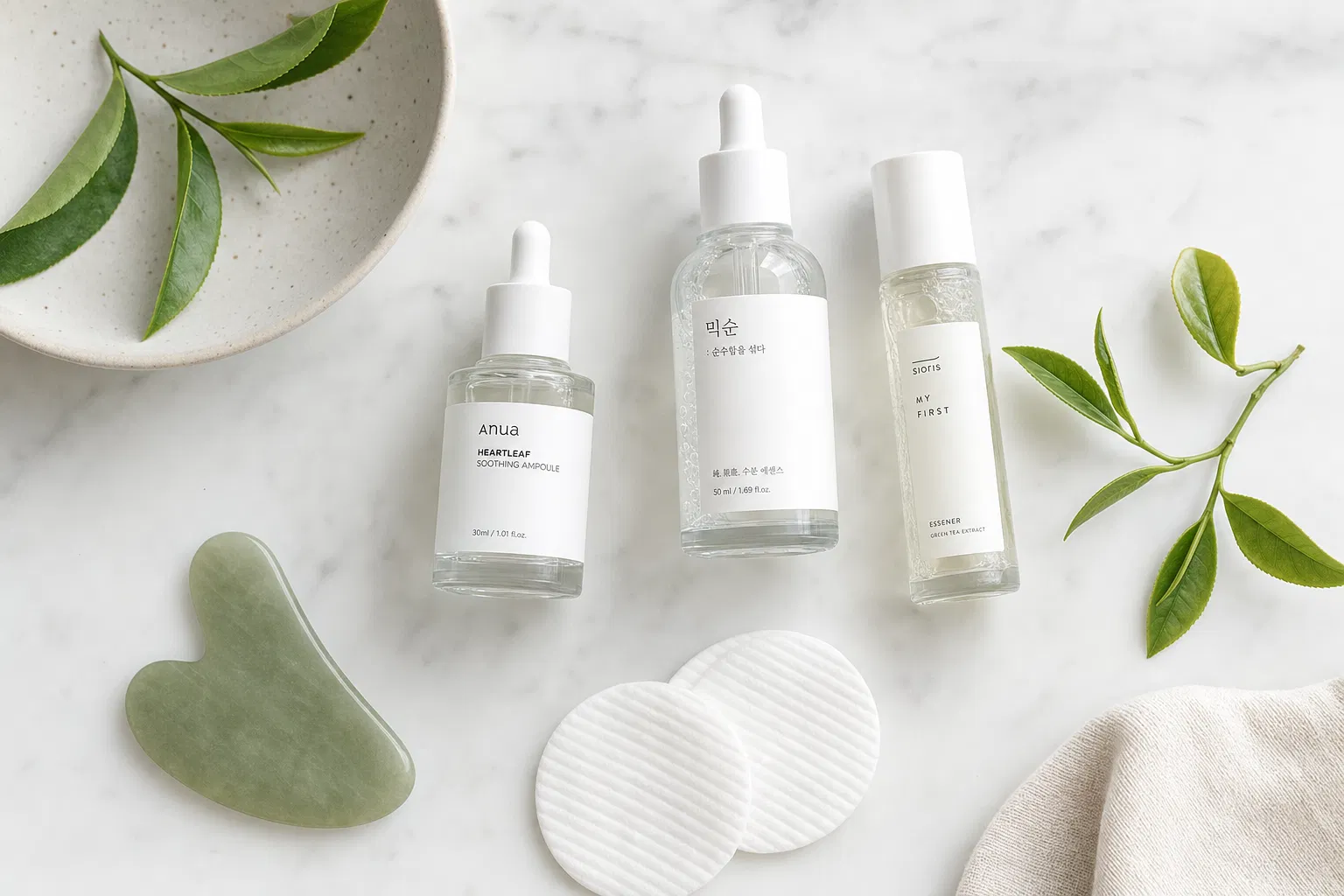
At the same time, a scientific approach called "Efficacy (hyoneung)ism" became mainstream in the Korean cosmetic industry. Publishing clinical trial data, collaborations with dermatologists, clear ingredient concentrations. The stance of showing not only "comfort" but also "how the skin actually changed" in numbers established trust in the global market. COSRX, Beauty of Joseon, Anua, Numbuzin, Skin1004, Round Lab — the reason these brands are supported globally lies in this "transparency of efficacy," not just low prices or appearance.
And this "efficacy-ism" is no longer just for skincare. The idea of nurturing hair with a "skincare mindset" is becoming the mainstream of current Korean hair care. Specifying ingredients and discussing repair effects through "design" — the KEMA Crema/Treatment Series translates that philosophy into hair care.

The 3-Layer Structure of K-beauty Brands
| Layer | Features | Representative Brands |
|---|---|---|
| Prestige | Inheriting Hanbang prescriptions. High price range. Department stores and duty-free shops. | Sulwhasoo / The History of Whoo / Hera / SU:M37° / Ohui |
| Road Shop | Main players of the 2000s-2010s. Reasonable with a wide lineup. | Innisfree / Etude House / Tonymoly / Missha / The Face Shop / Nature Republic |
| Indie / Craft | Efficacy-ism, ingredient-focused, SNS-driven. Rapid growth in the 2020s. | COSRX / Beauty of Joseon / Anua / Numbuzin / Skin1004 / Round Lab / Medicube / Torriden / Mixsoon |
CHAPTER 09 The indie revolution and
the SNS-native generation
Entering the 2020s, K-beauty has entered a new phase. While the large road-shop brands (Innisfree, Etude House, The Face Shop, etc.) that were the main players until then have struggled, indie craft brands have risen in the global market.
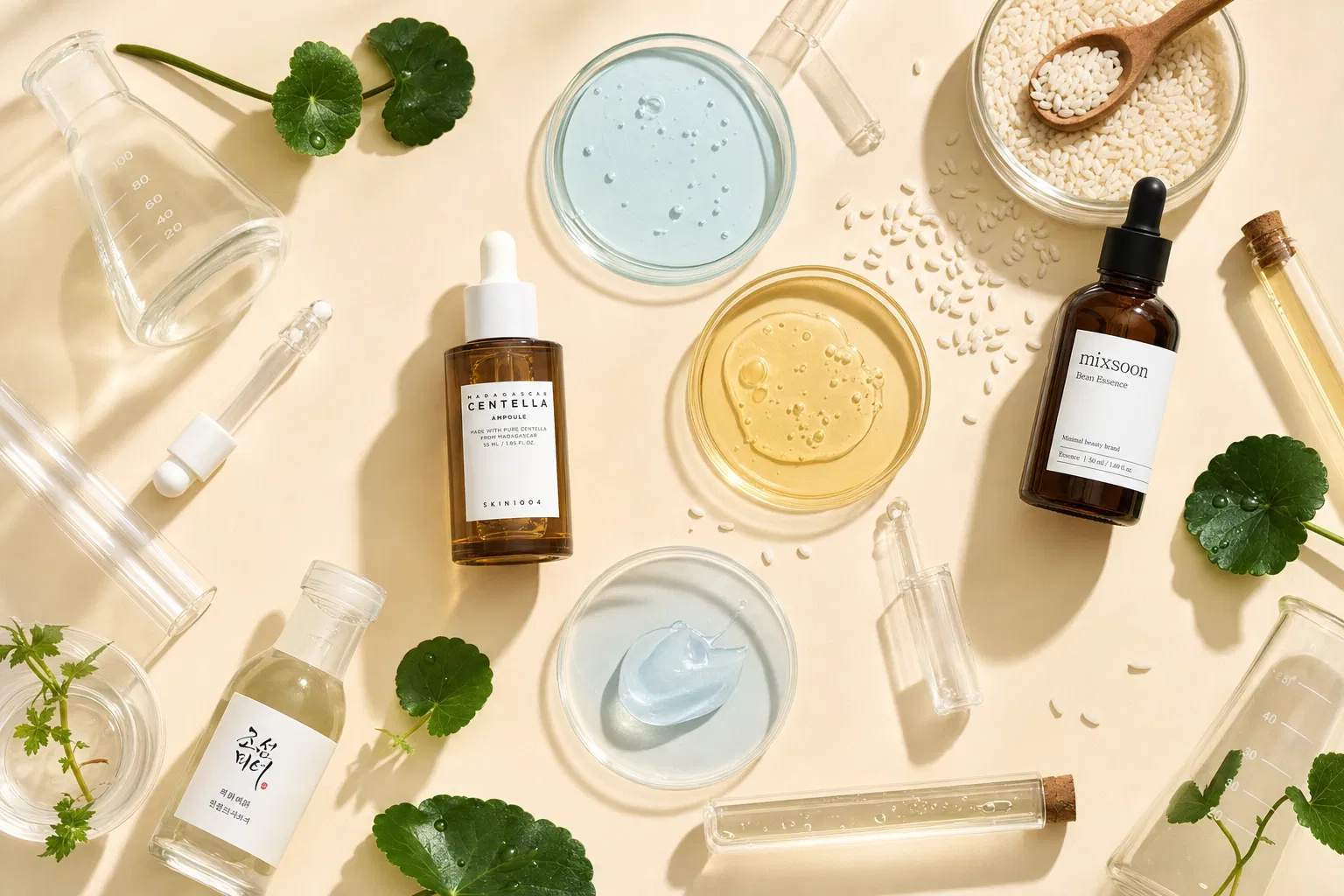
The sparks were lit by review sites, TikTok, Reddit, and YouTube reviewers in the US. Korean indie brands that met the conditions of "clear ingredients," "noticeable effects," and "reasonable prices" spread to the world through word of mouth. COSRX's Snail 96 Essence, Beauty of Joseon's Relief Sun, Anua's Heartleaf 77 Soothing Toner, Skin1004's Madagascar Centella Ampoule — all of them are hits born from SNS.
An essential piece of infrastructure supporting this transformation is the South Korean drugstore chain "Olive Young." By integrating their physical stores, e-commerce platform, and global e-commerce (Olive Young Global), they have established a system capable of discovering emerging brands and conducting test marketing. A brand that becomes a hit at Olive Young can go viral on TikTok globally and sell in massive quantities on Amazon—this three-layered distribution structure has become the engine for K-beauty exports. If you are actually planning to visit Seoul, it is also worth checking out our guide on how to navigate Olive Young during your Seoul trip.
Another point that cannot be overlooked is the high level of "ingredient literacy" among the social media-native generation. 5% niacinamide, 10% vitamin C, 0.1% retinol—the number of consumers worldwide who can decipher product labels and choose ingredients tailored to their specific skin concerns is increasing. K-beauty brands can be described as the group that has responded to this consumer behavior of "wanting to choose by ingredients" the fastest and most accurately. The trend of high-performance ingredients derived from cosmetic medicine trickling down into daily care is also symbolized by liposome technology, which is changing "how we deliver ingredients."
CHAPTER 10 The DNA of Perfectionism and
"Never-ending Improvement"
Finally, I would like to touch upon one more invisible force that supports the strength of K-beauty: the "perfectionism" and "obsession with improvement" deeply rooted in Korean society.
There is a Korean phrase called "Palli-palli (hurry, hurry)." It is a culture that demands everything be done speedily, efficiently, and with high quality. This temperament is clearly reflected in the cycle of cosmetic product development.
The product development cycle for new Korean cosmetics is overwhelmingly shorter than that of major Western companies. A speed of 3 to 6 months from trend identification to commercialization is astonishing compared to the 1 to 2 years major French or American companies take. This is made possible by the world's largest concentration of cosmetic OEM/ODM industries (such as Cosmax and Kolmar) located in Korea.
Furthermore, Korean consumers are known as the "toughest reviewers" in the world. They evaluate products from every angle—ingredients, texture, scent, packaging, and cost-performance—and will mercilessly give a low rating if it falls even slightly short of their expectations. This harsh feedback environment puts pressure on brands to "survive by constantly improving," which in turn has pushed product quality to a world-class level.
The "Palli-palli" culture, the concentration of OEM/ODM firms, and the discerning eyes of consumers: these three elements combined have earned K-beauty the global market trust of being "always the latest, and always improved." Aiming for perfection, and seeking the next level of perfection before even reaching the first—this DNA of never-ending improvement is what keeps K-beauty at the global forefront.
7 Keywords to Decipher K-beauty
Hanbang 한방 / Hanbang
Korean traditional medicine. An evolution of classical herbal medicine unique to Korea, epitomized by the 1613 "Dongui Bogam." The philosophy of combining botanical, mineral, and animal-derived ingredients to harmonize the skin and body from within forms the foundation of prestige K-beauty.
Nunchi 눈치 / Nunchi
The ability to instantaneously read the room, the emotions of others, and one's own position. It is a vital soft skill in Korean society and provides the cultural context for the high sensitivity toward personal appearance.
Glass Skin 유리 피부 / Glass Skin
The ideal of skin that is as transparent, smooth, and radiant as glass. It became a global buzzword around 2017. It is a modern translation of the aesthetic of "clear skin" dating back to the Joseon Dynasty.
Efficacy-ism 효능주의 / Hyonung-juui
The philosophy of prioritizing effects proven by clinical trials over usage experience or scent. This has been the mainstream value in indie K-beauty since the late 2010s.
CICA 시카 / Centella Asiatica
Centella Asiatica extract. Known for its soothing and restorative properties, it has become synonymous with sensitive skin care. It is an ingredient that bridges traditional Korean herbal medicine with modern dermatology.
PDRN 피디알엔 / Polydeoxyribonucleotide
A regenerative ingredient derived from salmon DNA. A classic example of a high-performance ingredient derived from cosmetic medicine filtering down into general skincare. A leading force of the 2020s.
Olive Young 올리브영
Korea's largest drugstore chain. It functions as a gateway for emerging brands by integrating physical and online stores. Global hits from Olive Young continue to emerge. → Olive Young stores to visit on your Seoul trip
CHAPTER 11 K-beauty Was a Cultural Inevitability
As we have seen, the strength of K-beauty was not built overnight.
The Confucian value that "appearance is an expression of character." The wisdom of Hanbang accumulated during the Joseon Dynasty. The longing for "clear skin" originating from the Yangban culture. The sensitivity toward the eyes of others sharpened by Nunchi culture. The industrial structural shift prompted by the IMF crisis. The mass production of beauty through the K-pop idol system. The grooming consciousness ingrained by the conscription system. The naturalism born as a reaction to being a cosmetic surgery powerhouse. The ingredient literacy and efficacy-ism of the social media era. And the speed of improvement backed by perfectionism.
These layers are stacked upon each other to create the current global presence of Korean cosmetics. K-beauty is a phenomenon born from the miraculous convergence of a thousand years of cultural history, 30 years of national strategy, and a 10-year social media revolution.
Behind a single sheet mask lie the prescriptions of Heo Jun, the white skin of the Yangban, the sensibility of Nunchi, the despair and comeback of the IMF crisis, the stages of idols, and the dialogue between countless researchers and consumers. When you think about it that way, doesn't your nightly skincare routine look a little different?
Choosing K-beauty is not just about grabbing a trendy product; it might be about incorporating this entire cultural richness into your own life.
K-beauty philosophy, for your hair.
"Inner and outer unity" nurtured from within, "efficacy-ism" where design dictates effect, and the DNA of never-ending improvement—KEMA has translated the philosophy that led Korean cosmetics to the top of the world into haircare. Moving toward an era where we "nurture" our hair, just like we care for our skin.
Visit KEMA SHOP →"Designing" Hair — KEMA Crema Treatment Series


Dig Deeper — Related Columns
We hope this article serves as a small guide in helping you choose your next favorite product.


