

The Reality of Korean Hair Salons:
How Do They Differ from Japan?
True Beautiful Hair Starts Here.
An increasing number of people are longing for the glossy hair seen on K-POP idols. But the secret lies in the very "culture" of their salons. Korean Hair Care Trends
Korean-style hair salons in Tokyo are currently so popular that there is a two-month wait for appointments. Driven by the influence of K-POP and Korean dramas, there is a surge in demand for "authentic Korean style" rather than just a "Korean-inspired look." However, delving deeper into Korean salon culture reveals that the differences from Japan go far beyond mere aesthetics.
In Korea, a salon is not just a place to get a haircut, but a place to manage the health of your hair and scalp. This fundamental difference in philosophy is what supports that incredibly glossy hair. In this article, we will unravel the realities of Korean hair salons, compare them to their Japanese counterparts, and explore the essence of Korean-style hair care that you can practice at home.
The First Surprise: "Menu Granularity."
Korean Salons Are Essentially Hair Clinics.
In Japan, the core salon services are cutting, coloring, and perming. While treatment menus exist, they are positioned strictly as "options." In Korea, however, service menus are incredibly granular.
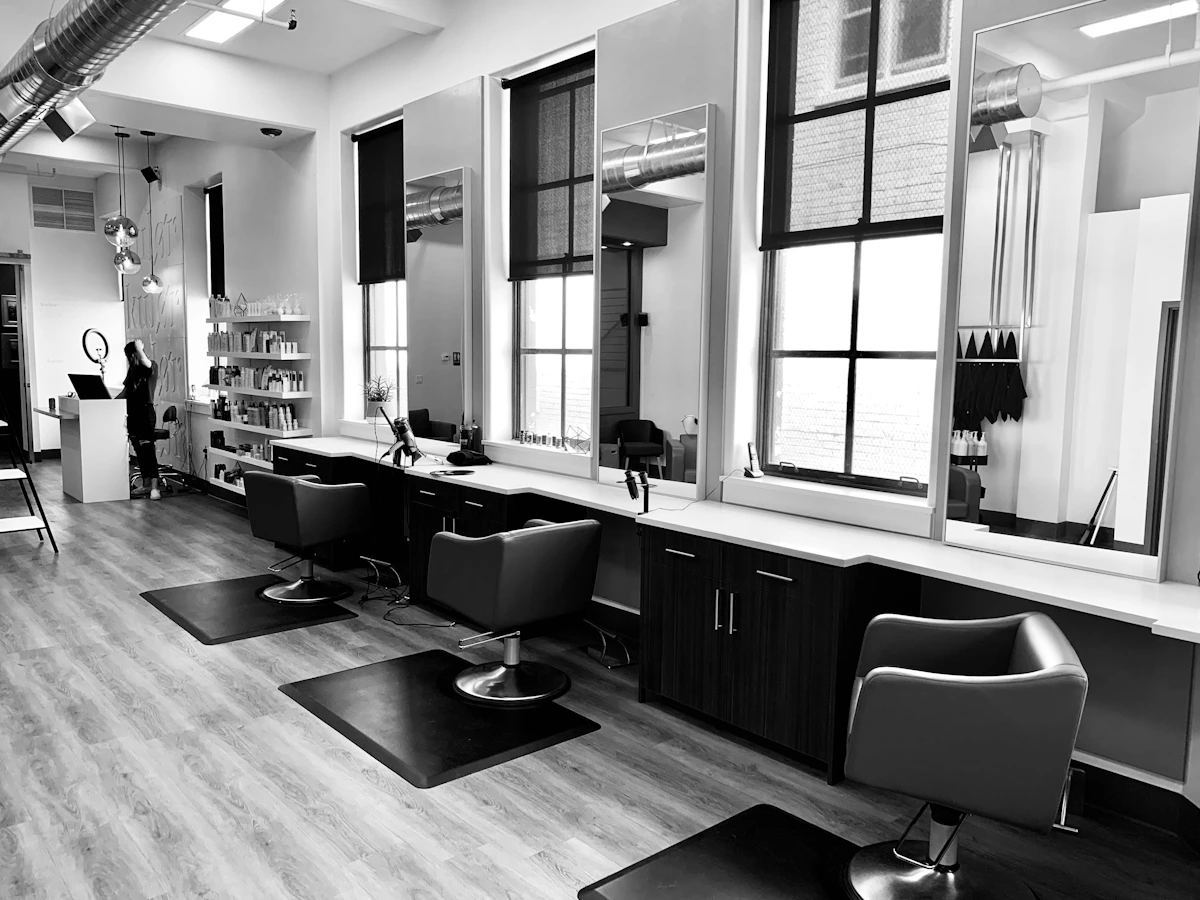
For instance, services like blowouts, shampoos, or bang trims—things one might think "aren't worth a trip to the salon" in Japan—are routinely booked in Korea. Even within the category of perms, there is a vast variety including S-curls, C-curls, and vintage waves. They truly function like a "primary care physician for your hair."
Differences Between Japanese and Korean Hair Salons
Focuses on cut, color, and perm. Treatments are treated as options.
Highly granular menus. Casual use for bang trims, blowouts, and styling is common.
Checking the "back of the hair" after styling is a standard service.
No culture of checking the back hair. The result is judged by the overall completion of the style.
Tendency to prioritize care for the "hair surface."
"Scalp management" is the top priority. The scalp is considered an extension of the skin.
Strengths lie in the stylist's versatility and polite customer service.
Extremely high sensitivity to trends; renowned for the ability to replicate K-POP styles.
Finishing styles vary by salon. Curling may only be done upon request.
Stylists will use an iron to curl hair without being asked. Finishing touches are a default.
Drink service is common. Light snacks are a minority.
Some salons offer unlimited drinks and light snacks like toast. Hospitality is very generous.
Furthermore, in Korea, prices vary based on a stylist's career and experience level. Within the same salon, haircut prices can range from 30,000 to 100,000 won. A major characteristic of Korean salons is this rigorous price setting based on individual skill.
"Norms" at Korean Salons That Surprise Visitors
"Complimentary Curling" as a Finishing Touch
It is standard practice at Korean salons to finish a cut or color by curling the hair with a straight iron, even without being asked. While curling with a barrel iron is mainstream in Japan, the Korean technique of creating natural, bouncy curls with a straight iron is a staple. It’s a delight to leave the salon with a perfectly "completed" look.
Unlimited Drinks + Light Snacks
While Japan offers drink service, Korean salons go a step further. For time-consuming procedures like perms or coloring, you might be served toast or sweets alongside unlimited drinks. It feels so comfortable—like a cafe—that you won't mind long treatments.
The Culture of "Stepping Out" During a Perm
It’s not uncommon for people to leave the salon while their hair is processing—towel still wrapped—to shop or visit a nearby cafe, returning when the time is up. While this is unthinkable in Japan, it is a routine sight in Korea.
This level of service reflects that for Koreans, a hair salon is not merely a "place for a procedure," but a time for "self-care"—a moment to relax and refine oneself. Providing a "perfect style," including the final curls, is the pride of a Korean salon.
The Core of Korean Beauty:
The Philosophy That "The Scalp Is Part of the Face."
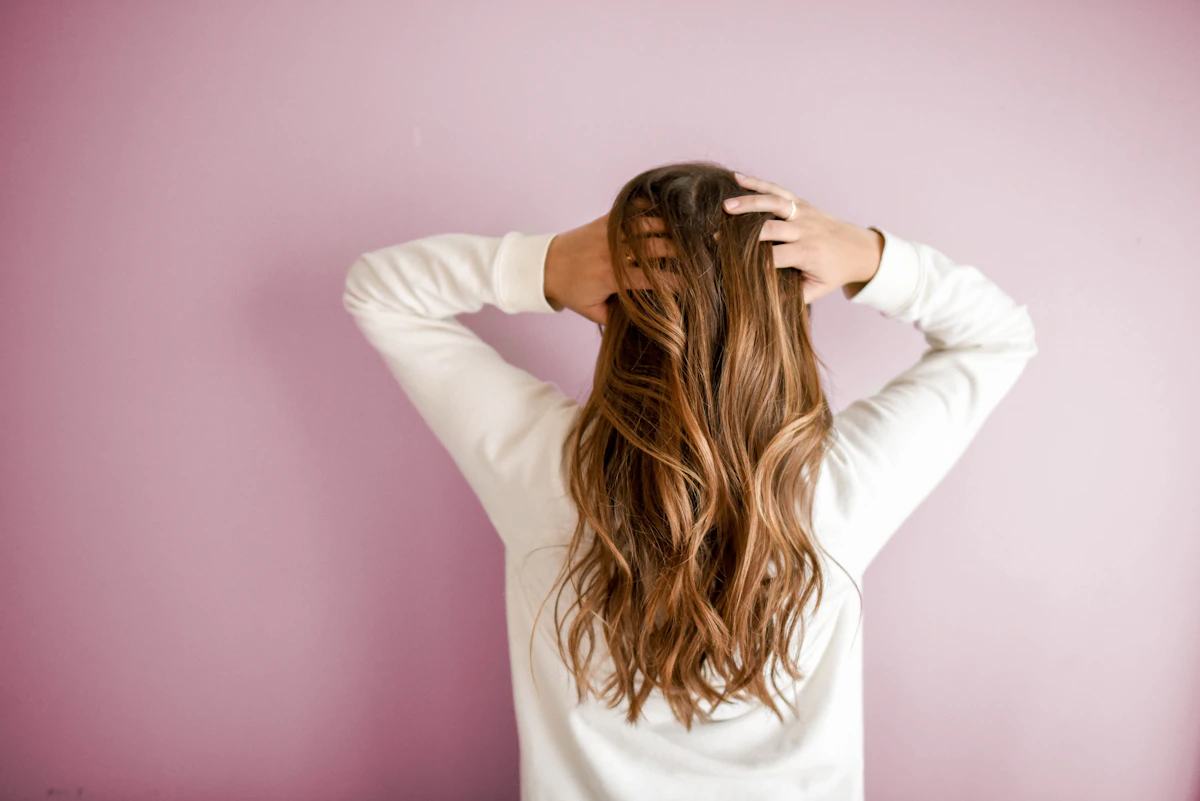
While Japanese hair care places weight on "how to repair damaged ends," the idea that "healthy hair can only come from a healthy scalp" is deeply ingrained in Korea. This is what is known as "Scalp Management."
"The scalp is part of the face."
—This simple phrase encapsulates
the entirety of Korean hair care culture.
Just as you meticulously layer skincare (cleansing → toner → serum → moisturizer), Korean hair care is structured in a multi-step routine: "Brushing (scalp care) → Shampoo & Treatment → Out-of-bath care." This extra care before washing and before drying is the key to beautiful hair.
Brushing (Scalp Care)
Detangling while promoting scalp circulation and lifting sebum and debris clogged in the pores. In Korean hair care, this "pre-wash step" is the most important foundation for beautiful hair.
Shampoo & Treatment
After washing with a low-irritation formula shampoo, provide nutrients with a treatment that repairs the hair internally.
Out-of-bath Care
After towel-drying and before using a hairdryer, protect hair with oil or balm. Lock in moisture while minimizing heat damage.
In recent years, "scalp care" has become a new trend in K-Beauty. Due to growing concern over scalp troubles caused by stress, air pollution, and hormonal changes, items like ampoules, scalp tonics, and LED brushes—on par with facial skincare—are being introduced one after another.
Current Korean Hair Trends:
"Airy & Natural" Is the Keyword.
 Soft layers and sheer, transparent colors are the latest trends in Korean hair.
Korean hair trends are currently dominated by "Air Touch" layers that subtly accentuate facial features. This style creates natural volume by enveloping the face with feather-light softness. For coloring, muted tones like ash beige and mushroom brown are gaining popularity.
Notably, Korean salons are focusing on hair-friendly coloring techniques. Ammonia-free agents and bond-repair procedures are becoming the norm, overturning the conventional wisdom that "hair gets damaged every time you dye it."
Featured Keyword: "Water-Gloss Hair" (Mul-Gwang Mori)
A major trend in Korea from 2025 onwards is "Water-Gloss Hair." Characterized by a transparent sheen that looks as if it contains water, this applies the same "Mul-Gwang" (water-gloss) concept used for skin to hair care. The foundation for this luster is a daily hair care routine.
Perms are also continuing to evolve. Korean-style perms are said to last 3 to 5 months with proper care, and "waisted layers" that create soft curves with C or S curls are particularly popular. However, maintaining these styles for a long time requires diligent daily hair care.
Bring Korean Hair Care into Your Daily Life.
KEMA Proposes "Hair Skincare."
 Your hair changes just by reviewing your daily routine a little.
The Korean salon culture we’ve looked at is rooted in a clear philosophy for creating beautiful hair: the three principles of "conditioning from the scalp," "valuing the order of care," and "repairing from the inside."
"KEMA," a premium hair care brand from Korea, has shaped this philosophy into products tailored for Japanese hair types and lifestyles.
KEMA utilizes liposome technology across all products. We are committed to a design that encapsulates active ingredients in fine capsules to deliver them carefully to the hair and scalp. By fusing nature-derived ingredients valued in Korea for generations—such as ginseng and camellia oil—with advanced technology, we define the KEMA formulation philosophy.
The answer to damaged hair is KEMA.
Tenderly care for your hair with select ingredients
that condition from the scalp—"Hair Skincare."
From scalp shampoo and treatments tailored to hair quality, to out-of-bath care—you can realize the multi-step Korean routine with the KEMA lineup. Start with scalp-care brushing, repair internally with shampoo & treatment, and lock in moisture with finishing out-of-bath care. By changing your daily habits just a little, your hair should also regain its original brilliance. The secret to the overwhelming gloss of Korean women is not a special talent or genetics, but the "diligence" of their daily care.
For those who want to learn more about the differences between Korean and Japanese hair care, please check out Differences Between Japanese and Korean Hair Care. The Korean approach to cultivating beautiful hair from the scalp is explained in detail in "Scalp Management" in Korean Beauty. Additionally, understanding the background of aesthetic values different from Japan will deepen your understanding of hair care—please also refer to Korean Aesthetic Values and Hair Care Habits.
Bring Korean Hair Care
Into Your Daily Life.
What Korean salon culture has taught us—beautiful hair is born from a diligent daily routine. Take your first step with KEMA.


